
Scientific focus
The school centers on metric geometry and the Gromov–Hausdorff distance, from foundational constructions and compactness questions to applications, lower bounds, and current research themes.
Peking University · October 19–30, 2026
A two-week international school devoted to metric geometry, Gromov–Hausdorff distance, mini-courses, invited lecture series, exercises, and open problems sessions.
Overview
The school centers on metric geometry and the Gromov–Hausdorff distance, from foundational constructions and compactness questions to applications, lower bounds, and current research themes.
The schedule combines four lecture series by Alexander O. Ivanov, Alexey A. Tuzhilin, Zhang Huichun, and Jiang Wenshuai, together with invited talks, daily problem-solving lectures, and discussions on open problems.
The China-Russia Mathematics Center is prepared to support travel, accommodation, and meals during the school period. Separate support for overview lectures may be available after program committee approval.
Highlights
Each main lecturer gets a coherent sequence of lectures rather than a single isolated slot.
Dedicated problem sessions keep the school useful for younger participants and help unify notation and methods.
The session "Lecture: discussion on open problems" creates space for current questions, interaction, and informal continuation of the lectures.
Lecture series
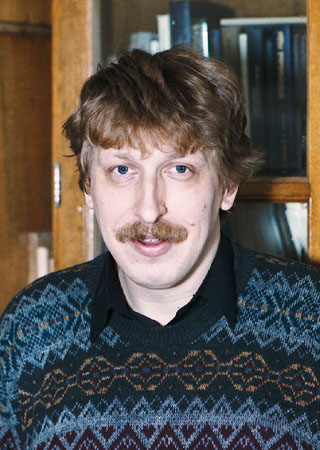
Lomonosov Moscow State University
Introduction and basic properties of Gromov–Hausdorff distance
A four-lecture series on the foundations of GH geometry and the structure of compact metric spaces.
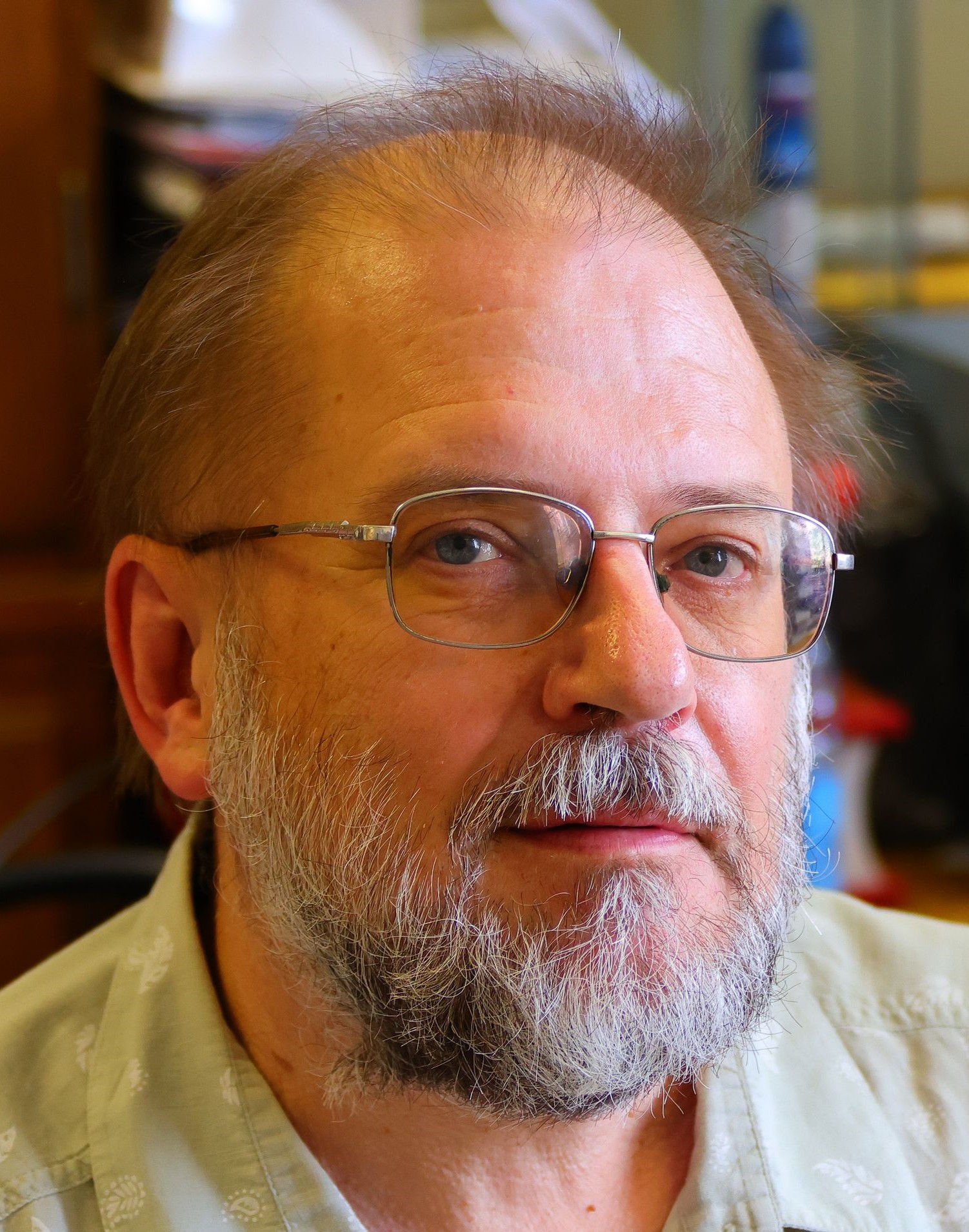
Lomonosov Moscow State University
Gromov–Hausdorff distance: applications and lower bounds
A four-lecture series on applications, lower bounds, ultrametrization, and geometric methods.

Sun Yat-sen University · School of Mathematics
Alexandrov geometry, RCD spaces, and metric-valued analysis
A five-lecture series on Alexandrov spaces, RCD spaces, Sobolev mappings, and harmonic map regularity, presented by a professor of geometric analysis at Sun Yat-sen University.
Research area: geometric analysis on nonsmooth spaces, Alexandrov geometry, and geometric PDEs · Contact: zhanghc3@mail.sysu.edu.cn
View course program
Zhejiang University · School of Mathematical Sciences
Ricci limit spaces, splitting, and geometric analysis
A five-lecture series on volume comparison, splitting, almost cones, and regularity of Ricci limit spaces, presented by a professor of geometric analysis at Zhejiang University.
Research area: geometric analysis · Contact: wsjiang@zju.edu.cn
View course programInvited talks
Lomonosov Moscow State University
Analogues of the Gromov–Hausdorff distance
Monday, October 26 · 10:00–10:50
The talk compares the two classical approaches to the Gromov–Hausdorff distance: the geometric (external) approach, based on isometric embeddings of the two metric spaces into a common ambient space and the Hausdorff distance between their images, and the functional (internal) approach, based on pairs of maps between the spaces and the distortion they produce. Modifications of the classical definition are surveyed — restricting or extending the class of isometric embeddings, replacing the Hausdorff distance by the Charatonik or Borsuk metrics on the exponent exp Z, and the resulting Gromov–Borsuk distance — together with parallels to the Banach–Mazur distance, to Borsuk’s theory of shapes (ε-maps and multivalued maps) and to the topology of the Minkowski compact of n-dimensional normed spaces.
Harbin Institute of Technology · School of Mathematics
On the existence of minimal parametric networks
Monday, October 26 · 11:10–12:00
Finding a minimal (shortest) network connecting a prescribed finite boundary in a metric space is a classical problem of the calculus of variations and geometric optimization, best known in the form of the Steiner problem. Fixing the tree structure turns it into a parameter and leads to the problem of minimal parametric networks. The talk discusses which spaces and hyperspaces are suitable for solving this problem, which topological and functional-analytic conditions are responsible for solvability, and whether algorithms that find the true optimum can be expected at all.
Lomonosov Moscow State University
Geometric structures and second-order differential equations: results and open problems
Tuesday, October 27 · 10:00–10:50
From a geometric viewpoint, second-order differential equations are submanifolds of 2-jet spaces; following V. Lychagin, a wide class of such equations — including all linear and quasilinear equations and the Monge–Ampère equations — is described by differential 2-forms on 1-jet spaces, which makes it possible to reduce non-degenerate nonlinear equations to linear ones by symplectic and contact transformations. The talk discusses the geometric structures associated with second-order equations (distributions, tensor fields, complex structures, almost-product structures and Riemannian structures), illustrates them with examples from physics, formulates open problems, and touches upon the prospects of applying the theory of the continuous Gromov–Hausdorff distance to such equations.
Invited speaker
Gromov–Hausdorff convergence with group action
Tuesday, October 27 · 11:10–12:00
In many algebro-geometrical problems, a sequence of algebraic varieties with a reductive group G-action converges (in a certain sense analogous to Gromov–Hausdorff convergence) to a limit variety that also admits a G-action. Moreover, there are also results on properties of the structure of orbits in the limit variety. In this talk, we will first introduce some algebraic background, then we will show that for a bounded sequence of compact metric spaces with compact torus action, a subsequence converges in the Gromov–Hausdorff topology to a limit space which also has a compact torus action. This result partially generalizes a result of Lim–Memoli.
Quick access