Pyotr Konstantinovich Rashevsky
(1907 - 1983)


Dear
Colleague,
We invite you to a meeting of the Moscow
Mathematical Society, dedicated to the centenary of the birth of the outstanding
mathematician, Professor Pyotr Konstantinovich RASHEVSKY, who was the head of
the Department of Differential Geometry at the Faculty of Mechanics and Mathematicsof Moscow State University. The meeting will take place on
Tuesday, November 27, 2007, in Room 1624 (16th floor) of the Main Building of Moscow State University,
starting at 6:00 PM.30 m
Agenda:
1.
G.L. Litvinov,
A.T. Fomenko. "In Memory of Petr Konstantinovich"
Rashevsky".
2. E.B. Vinberg.
"On the works of P.K. Rashevsky on the theory of
Lie groups".
3. O.V. Manturov. "Seminars by Pyotr Konstantinovich Rashevsky.
Participants and Results."
4. D.B. Persits.
"Pyotr Konstantinovich Rashevsky
in my life".
If you do not have a one-time pass to the Main
Building of Moscow State University, you can apply for it either to the Board of the Moscow
Mathematical Society or to the Department of Differential Geometry and
Applications, tel. 939-39-40 (Valentina Nikolaevna Firsova).
Sincerely,
A.T. Fomenko
Academician of the Russian Academy of Sciences, Head of the Department
of Differential Geometry
and Applications of the Faculty of Mechanics and Mathematics
at Moscow State University
==================================================================
G.L. Litvinov.
A.T. Fomenko
"IN MEMORY OF
PETR KONSTANTINOVICH RASHEVSKY"
Presentation
at the meeting of the Moscow Mathematical Society,
dedicated to the 100th anniversary of the birth of P.K. Rashevsky on November 27, 2007.
Key points
of A.T. Fomenko's presentation
a) P.K. Rashevsky -
an outstanding mathematician, author of many remarkable works, widely known for his
fundamental research in the fields of Riemannian geometry and tensor
analysis, the theory of groups and Lie algebras, and the theory of their representations.(In particular, he
obtained important results in the problem of describing tensors that admit a given
invariance group, in the geometric theory of differential equations,
solved Cartan's problem, investigated the structure of the set of spherical functions on
homogeneous spaces, studied the associative enveloping algebra
of Lie algebras and their infinite-dimensional representations,
the topological properties of automorphismsLie groups).Rashevsky
made significant contributions to several fundamental
areas of modern geometry and significantly influenced their
development.
b) P.K. Rashevsky
For a long time, he headed the Department of Differential Geometry at
the Faculty of Mechanics and Mathematics at Moscow State University (1964–1983). After his death, the department was temporarily merged
with another department and was re-established in 1992 under the name
"Department of DifferentialGeometry and Applications" (Head
A.T. Fomenko). This department is actively
developing, largely thanks to the problems and ideas that
were posed and articulated by P.K. Rashevsky.
c) P.K. Rashevsky
was interested in a wide variety of problems in modern geometry.He had
an exceptionally well-developed mathematical intuition, and he was very successful in setting tasks
to his students. For many years,
the well-known seminar "Tensor Analysis and Its Applications"
"Tensor Analysis and Its Applications" was held for many years.He was a focal point not only
only for Moscow geometers, but also for many colleagues from other cities.The research conducted by various scholars within the framework of this seminar formed
the content of the well-known periodical series of works (under the same name).These
works (albeit not as regularly) are still published today.
I will list the main research areas
of today's Department of Differential Geometry and Applications,
inspired by Rashevsky:
1.Rashevsky devoted much
attention to the study of the geometry and topology of Lie groups and
homogeneous spaces.Several scientific disciplines have emerged from this.For example, the study of subgroups of Lie groups, non-homologous
to zero in the enveloping Lie group, and the calculation of Poincaré polynomials of homogeneous
spaces (for more details, see the presentation by Professor O.V. Manturov). Fomenko's description of totally geodesic surfaces,
which realize non-trivial homology cycles in
that realize non-trivial homology cycles insymmetric spaces (including
including in the Lie groups).In particular, a description was obtained
a description of completely geodesic and topologically non-trivial spheres in
symmetric spaces.
2.Geometric variational problems, including
including multidimensional ones.It was P.K. Rashevsky who directed
once directed my interests toward the study of globally minimal surfaces in
Riemannian manifolds.This is where the theory I developed with my students originated:in
particular, the proof of the existence of globally minimal surfaces in
each class of spectral bordisms of a Riemannian
manifold.And also - in each class of extraordinary homologies and cohomologies
of a manifold (spectral bordisms are a special
case).These ideas were developed in the works of Professors Dao Chong
Thi and Le Hong Van. Subsequently,
Professors A.O. Ivanov and A.A. Tuzhilin achieved significant
results in the Steiner problem - the classification of one-dimensional minimal networks (with
fixed ends (i.e.branching
geodesics) or without boundary points at all) on two-dimensional surfaces, in
particular, on a plane, on a torus, and on surfaces of constant negative
curvature.Although Rashevsky himself did not work on one-dimensional
did not work on one-dimensional branching geodesics himself, he was very interested in this new
approach.
3.Rashevsky often
talked to me about the general properties of groups and algebras of Lie.He was interested in properties that hold simultaneously for all Lie algebras and for a sufficiently broad class (for example,
the existence of a Poisson bracket on any finite-dimensional Lie algebra), non-degenerate
on the orbits of the coadjoint action of the group on its own
coalgebra. To a large extent, it was
these ideas of Rashevskywere subsequently revived in
the hypothesis formulated by A.S. Mishchenko and A.T. Fomenko, according to which any
finite-dimensional Lie algebra possesses a complete commutative set of independent polynomials,
i.e.in involution (with respect to the Poisson bracket).In other words, their
number must be equal to half the sum of the dimension of the algebra and its index (index
= dimension of the annihilator of a general position covector).Such sets of polynomials generate completely integrable systems of differential
equations in the Liouville sense.In the case of semisimple
algebras L, the hypothesis was proven by Mishchenko and
Fomenko themselves, and in the general case (relatively recently) by S.T. Sadetov.In a sense, this means that on any finite-dimensional algebra L, there exists a polynomial analogue of Darboux coordinates (the classical
Darbu's theorem states that in the neighborhood of each point on a symplectic
manifold, the symplectic form can always be reduced
to a constant canonical form with respect to locally existing Darboux coordinates).
4.Rashevsky devoted a lot
of attention to geometry in mathematical physics.It is no coincidence that in his famous
book "Riemannian Geometry and Tensor Analysis," a significant portion
is devoted to the theory of relativity and spinors (spinor
representations of the orthogonal group).Today, the department continues to actively pursue
the scientific field led by Professors V.L. Golo and
A.I. Shafarevich, "Mathematical Physics, Geometry, and Topology."Studies on the geometry and topology of complex protein molecules stood out separately:
molecules:Professors V.L. Golo, A.O. Ivanov, and A.A. Tuzhilin
with their students, in collaboration with the Faculty of Biology at Moscow State University (the laboratory
of Professor K.V. Shaitan).Another area of focus:
"Differential Equations in Geometric Problems of Celestial
Mechanics and Mathematical Physics" is being developed by Associate Professor E.A. Kudryavtseva.
5.Rashevsky
was very interested in smooth functions, whose singularities fill
non-degenerate submanifolds (Morse functions are a special case where these
submanifolds are individual points).This topic was discussed repeatedly at
the Rashevsky seminar.After some time, these ideas of his
thoughts served as one of the foundations of the theory developed by Fomenko and his students, and, primarily,
A.V. Bolsinov and A.A. Oshemkov,
the theory of classification of integrable Hamiltonian systems with two degrees
of freedom.It turned out that such systems are classified
with an accuracy up to Liouville equivalence (as well as with
accuracy up to continuous and smooth trajectory equivalence) by certain
graphs whose vertices are the so-called"atoms", and some numerical labels
some numerical labels are placed.Such invariants are more or less algorithmically calculated for a variety of specific
mechanical and physical systems.By comparing these invariants, it was possible, for example,
to discover unexpected topological trajectory isomorphisms between some
known dynamical systems (e.g., the Jacobi system and the Euler system).I also managed to prove the topological (and smooth) non-equivalence of some
well-known systems.
6.Rashevsky
himself
did not have time to formulate his thoughts on certain aspects of algebraic topology and algebraic
geometry in the form of published works.
However, he was constantly interested in topology and kept abreast of all the new
noteworthy results.As a result, a favorable atmosphere has developed within the department
for the development of this field.It is currently undergoing active development within the Department of Differential Geometry.These are the students of Professor Yu.P. Solovyov:Associate Professor F.Yu. Popelensky
and Assistant Professor I.M. Nikonov, as well as Professor A.B. Skopenkov
and Associate Professor A.B. Zheglov.
7.During Rashevsky's lifetime,
computational geometry began its rapid development.Although Pyotr Konstantinovich himself
Konstantinovich himself did not use a computer, but he followed this field with interest.
field with interest.He was interested in mathematical modeling of physical processes.Once, I addressed the Academic Council of the Faculty of Mechanics and Mathematics with proposals
on the integration of computational methods into geometry teaching.Today,
computational geometry is a major and important topic in the department, developing under the
the guidance of Associate Professor G.V. Nosovsky and Assistant Professor D.P. Ilyutko.A textbook on computational geometry has been written,
and a special course is being taught.
8.Rashevsky was also concerned with the foundations of mathematics.For example, he and I discussed non-standard mathematical analysis. Rashevsky pondered extensively
on the properties of very large natural numbers and contemplated the idea
of a branching natural number series.This image emerged during the discussion of possible
algorithms for comparing large numbers without "counting them down to
zero."In his view, large numbers are fuzzy objects with
fuzzy boundaries.A certain new algebra of such objects is emerging.Some ideas were published by Rashevsky in a note
in the Russian Mathematical Surveys, which at the time elicited mixed reactions from
some mathematicians.
Rashevsky was
a man of exceptional scientific integrity.If he didn't like a piece of work
like a piece of work or found it flawed, he would clearly state so, regardless of
who was involved.He was principled in matters of scientific and public morality.Once,
as the chairman of the admissions committee at the Faculty of Mechanics and Mathematics,
I categorically refused to comply with a behind-the-scenes request that came "from
the very top" to improve an applicant's grade. As a result, I got myself into trouble, but
I never regretted such actions.
--------------------------------------------------------------
Students
and colleagues who participated in P.K. Rashevsky's seminar:
Akivis M.A. (Max Aizekovich)
Biktashev R.A.
Bogaevsky A.N.
Borovsky Yu.V. (Yuri
Vladimirovich)
Gurevich G.B. (Grigory
Borisovich)
Wagner V.V. (Victor
Vladimirovich)
Vasiliev A.M. (Anatoly
Mikhailovich)
Weinstein A.G.
Vartolomeev V.V.
(Vitaly Viktorovich)
Vinberg E.B. (Ernest Borisovich)
Vishnevsky V.V.
Dao Chong
Thi
Doan Quynh
Evtushik L.E. (Leonid
Evgenievich)
Efremovich V.A. (Vadim
Arsenievich)
Kamyshansky N.R.
Kantor I.L. (Isaiah
Lvovich)
Komrakov B.P. (Boris Petrovich)
Konyushikhina T.N. (Tatyana...)
Kruchkovich G.I. (Georgy Ionovich)
Kushner G.F. (Guriy
Fedorovich)
Liber A.E.
Litvinov G.L. (Grigory Lazarevich)
Lopshits A.M. (Abram Mironovich)
Mishchenko A.S. (Alexander
Sergeevich)
Manturov O.V. (Oleg Vasilyevich)
Norden A.P. (Alexander
Petrovich)
Persits D.B. (David Borisovich)
Petrov E.E. (Evgeny
Evgenievich)
Petrova V.T. (Vera
Timofeevna)
Platonov S.S. (Sergey
Sergeevich)
Pyasetsky V.S. (Vladimir
Semenovich)
Rosenfeld B.A. (Boris
Abramovich)
Sabinin L.V. (Lev Vasilyevich)
Sabitov I.Kh. (Idzhat Khakovich)
Samborsky S.N. (Sergey
Nikolayevich)
Semyanisty V.I. (Vladimir ...)
Sirota A.I. (Alexander
Isaakovich)
Skopets I.M.
Solovyov Yu.P. (Yuri
Petrovich)
Solodovnikov A.S.
(Alexander Samuilovich)
Trofimov V.V. (Valery
Vladimirovich)
Fedenko A.S. (Anatoly
Semenovich)
Fomenko A.T. (Anatoly
Timofeevich)
Shapiro Ya.L.
Shirokov A.P. (Alexander
Petrovich)
Shpiz G.B. (Grigory
Borisovich)
Elashvili A.G. (Alexander
Grigorievich)


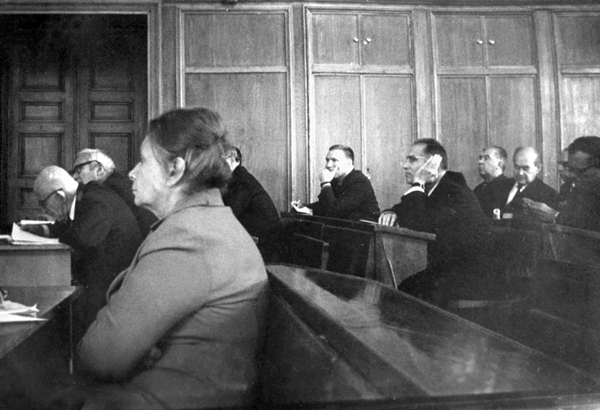
A.T. Fomenko, O.V. Manturov. V.A. Vasiliev

E.B. Vinberg, A.T. Fomenko

I.A. Shishmarev, A.T. Fomenko


G.L. Litvinov


E.B. Vinberg

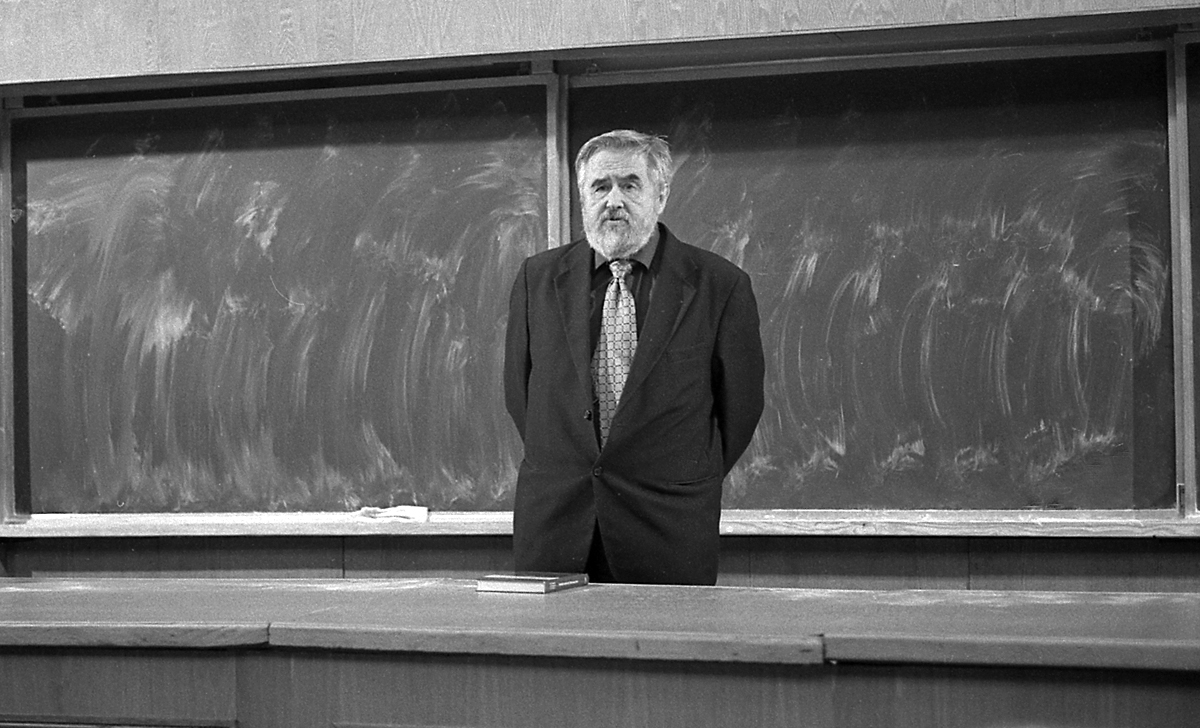

O.V. Manturov


D.B. Persits


=================================================================
To the Dean
Faculty of Mechanics and Mathematics, Moscow State University
Corresponding Member
of the Russian Academy of
Sciences, Professor
O.B. LUPANOVA
from the Head of the Department
of Differential
Geometry and Applications
Member of the Russian Academy of Sciences
A.T. FOMENKO
Dear Oleg
Borisovich!
For many years, at the Faculty of Mechanics and Mathematics
Faculty of Moscow State University, at the Department of Differential Geometry, under the supervision of
Professor P.K. Rashevsky, Head of the Department,
a seminar on vector and tensor analysis with applications to geometry,
mechanics, and physics was held.The seminar was founded many years ago by Professor
V.F. Kagan.The Department of Differential Geometry regularly published the Proceedings of this
seminar.In recent years, the seminary has not been operating, and the Proceedings have not been published.
In the current year, 1998, the Department
of Differential Geometry and Applications has resumed the seminar and plans to
to resume the publication of its Proceedings.The seminar is very popular, and its
Many mathematicians attend its sessions, and not only those from Moscow State University.As in previous
years, it once again became not only a university seminar but also a Moscow-wide
geometry seminar.
The Department requests:
1) Name the seminar after P.K. Rashevsky.
2) Approve the seminar board consisting of:
Academician A.T. Fomenko (Chairperson),
Professor V.V. Trofimov
(Co-Chair),
Professor A.V. Bolsinov,
Professor N.P. Dolbilin,
Professor L.E. Evtushik,
Professor G.L. Litvinov
Professor O.V. Manturov,
Professor A.S. Mishchenko,
Professor A.L. Onishchik,
Professor I.Kh. Sabitov,
Professor Ryshkov
S.S.
3) Appoint Prof.
A.T. Fomenko and
Prof. V.V. Trofimova.
4) Resume the publication of the Proceedings of the Seminar at
the Faculty of Mechanics and Mathematics of Moscow State University under its former title "Proceedings
of the Seminar on Vector and Tensor Analysis with Their Applications to Geometry,
Mechanics and Physics".
With the utmost respect,
A.T. Fomenko
June
19, 1998
Approved at the meeting
of the Academic Council
Mechanics and Mathematics
of the Faculty on June 26, 1998.